
WSpoint »
Welcome to the WSpoint.pl Knowledge HUB. Once you have decided to skydive, dreaming of wingsuiting is a natural step forward; it is the closest a human can get to the flight of a bird. However, before you don your 'wings,' you must face what the community calls the 'Magic Number: 200.'
Here is a breakdown of why this requirement exists, what global organizations demand, and why those 200 jumps are your best friend - not your enemy.
Why 200? It’s Safety, Not Bureaucracy
A common question from ambitious students is: "Am I really dangerous at 199 jumps, but suddenly a pro at 200?". Of course not. The number 200 is a statistical checkpoint where several critical skills typically converge:
-
Muscle Memory: By 200 jumps, emergency procedures and stability are instinctive. In a wingsuit, your arms and legs are restricted by fabric; you don't have time to "think" about where your handles are, you must just know.
-
Environmental Awareness: Wingsuiting drastically changes horizontal speed and glide ratios. You need to be able to navigate back to the dropzone and maintain separation from others, skills that require hundreds of repetitions in "naked" skydiving.
-
Stress Management: Your first flight generates a massive adrenaline spike that can cause "tunnel vision." Experience allows you to keep a cool head when things don't go exactly to plan.
Generally speaking it is not only figure 200, you just simply must remain current!
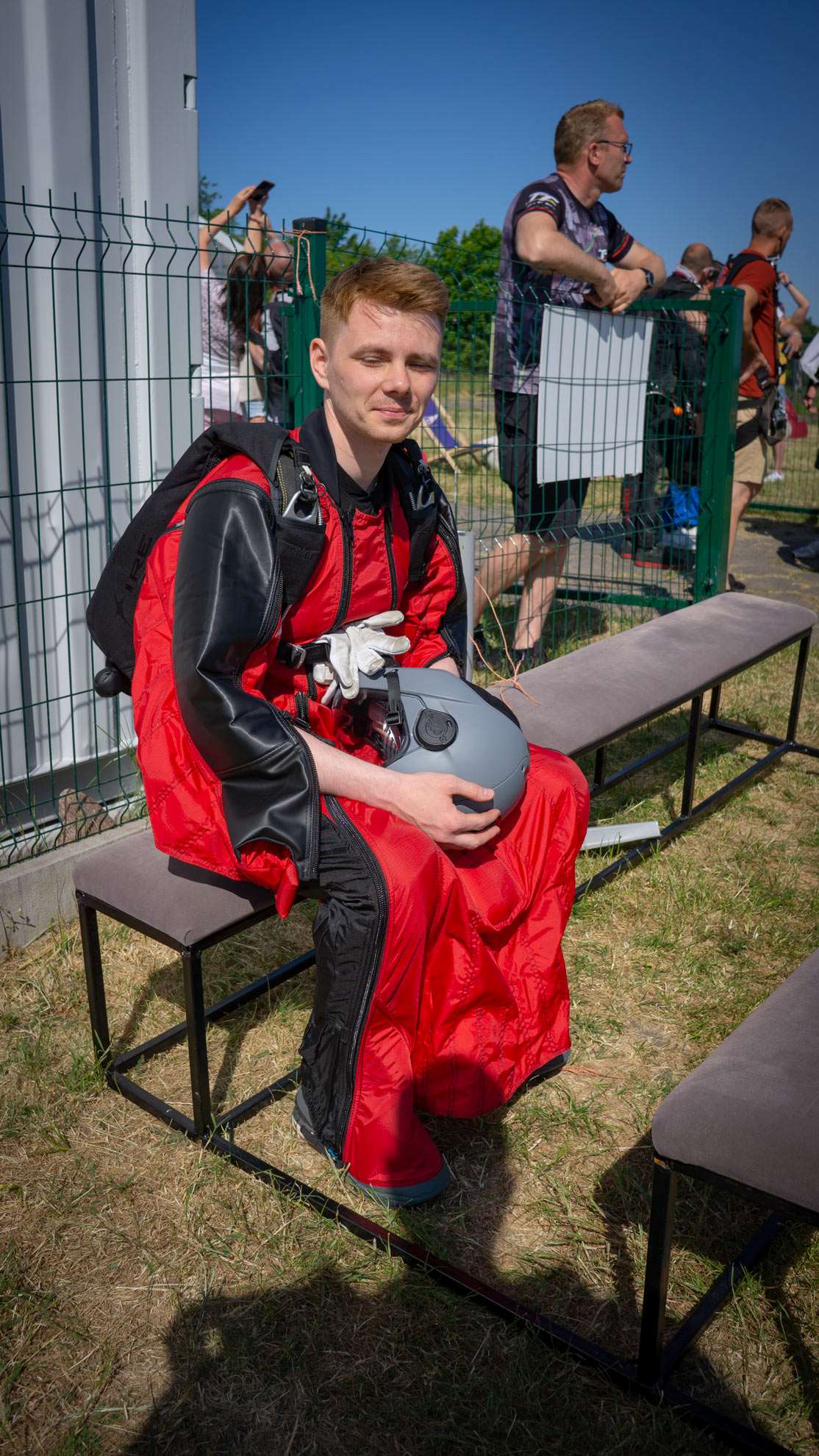
Global FFC Requirements
Bottom line as basics. While instructors which understand well management of risk usually advocate for the highest training standards, specific requirements vary slightly by country and organization:
| Organization | Jump Requirement | Additional Criteria |
|---|---|---|
| USPA (USA) | 200 (B license) | And have completed 200 jumps within the last 18 months. |
| BPA (UK) | 200 / 500 | A minimum of 200 skydives within the last 18 months, or 500 total skydives. |
| APF (Australia) | 200 (D license) | First Flight Course (FFC) only under instructor supervision. |
| DFV (Germany) | 200 | First Flight Course (FFC) only under wingsuit instructor supervision. |
| SBF (Sweden) | 300 | First Flight Course (FFC) only under wingsuit instructor supervision. |
| FAI (International) | 200 (C license) | Freefall and under canopy - Sufficient experience to safely engage in advanced maneuvers . |
| ULC (Poland) | minimum 50 (B license) | ... to move into advanced disciplines, the program mirrors FAI standards. |
USPA (USA)
Jump Req: 200
Criteria: Must hold a B-License and have completed 200 jumps within the last 18 months.
BPA (UK)
Jump Req: 200 / 500
Criteria: A minimum of 200 skydives within the last 18 months, or 500 total skydives.
APF (Australia)
Jump Req: 200
Criteria: Certificate D or higher; First Flight Course (FFC) only under instructor supervision.
DFV (Germany)
Jump Req: 200
Criteria: First Flight Course (FFC) only under wingsuit instructor supervision.
SBF (Sweden)
Jump Req: 300
Criteria: First Flight Course (FFC) only under wingsuit instructor supervision.
FAI (International)
Jump Req: 200 (C license)
Criteria: Freefall and under canopy - Sufficient experience to safely engage in advanced maneuvers.
ULC (Poland)
Jump Req: minimum 50 (B license)
Criteria: ... to move into advanced disciplines, the program mirrors FAI standards.
Manufacturer Manuals: Leading wingsuit manufacturers (e.g., Squirrel) that the 200-jump minimum is only valid if the jumper is current (active in the last 6 months), otherwise, they recommend a higher jump count (500) to compensate for "rusty" body/canopy skills.
Pro Tip: If you are looking for a First Flight Course (FFC), be prepared for a wingsuit coach endorsed by major manufacturers (such as Squirrel) to check your logbook and skills before taking you for training or selling you a suit. Responsible and risk aware coach will not put a high-performance tool in the hands of someone who isn't ready. A good rule of thumb: if you have to ask if you are ready, you probably aren't!
"Why we care about the "200-jump" foundation:
As organizers of big wingsuit events like AWF18 and AWF22, we've seen that the best quality flyers are those who built a concrete foundation during their first jumps and systematic follow progress structure. It's not just a number; it's the bedrock of record-breaking flight."
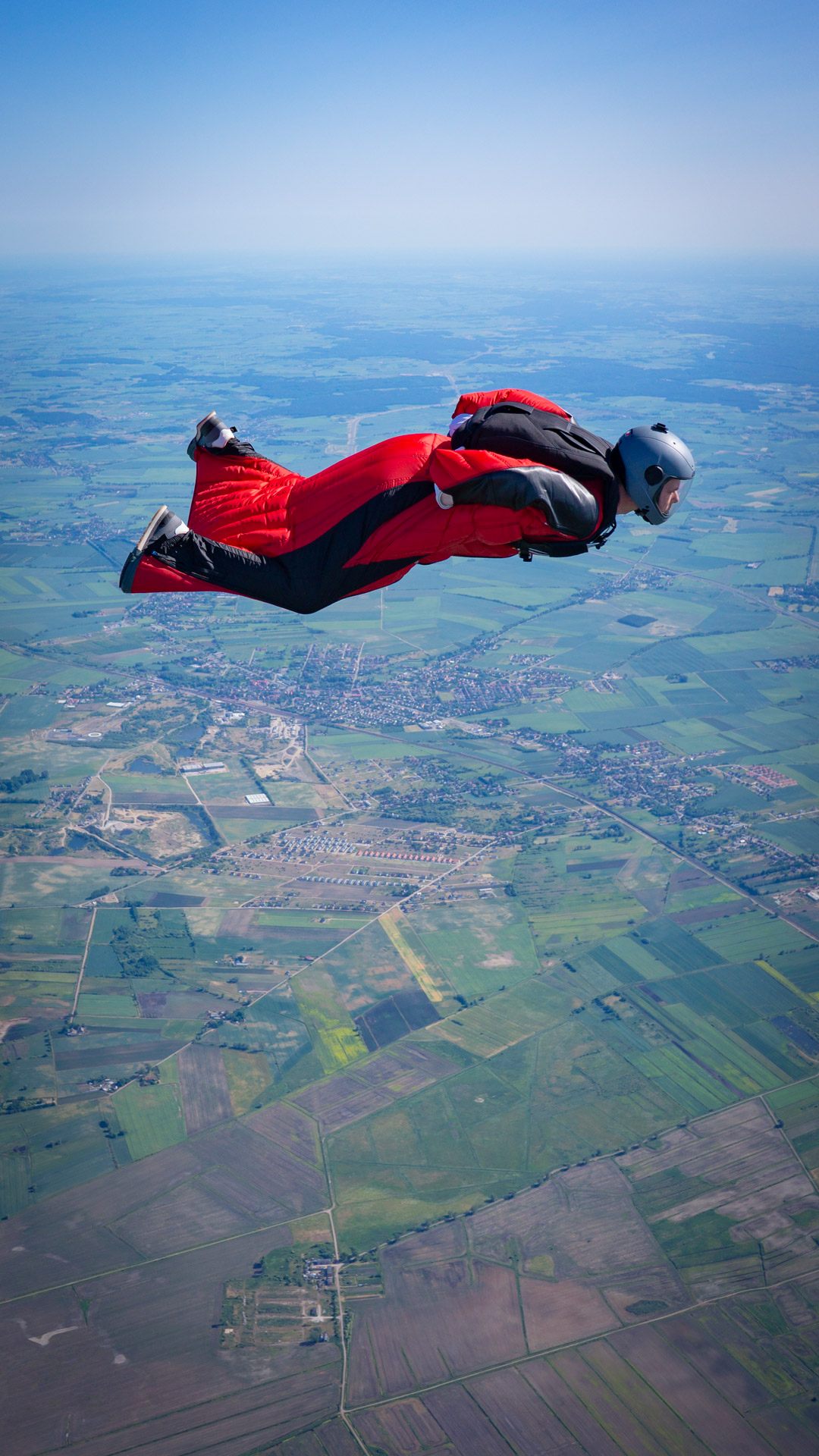
What to do While You Wait for #200
Don't view the road to "200" as a "sentence" where you make number of useless jumps. Use this time as a preparatory phase to ensure your first wingsuit flight is a success rather than a struggle:
-
Master the Tracking skill: Start flying "tracks". They teach you the fundamentals of horizontal movement and angle flying without the restriction of arm wings.
- Master the FS: Start flying "belly formations". They teach you the fundamentals of distance, speed and approach to the "base". Once you start flying with other person you will do same just with different speeds.
-
Perfect Your Canopy Work: Wingsuits FFC often result in long spots or off-field landings. You need to be an expert at navigating your parachute back from far away. But not limit for distance, responsible piloting is much more to know and practice.
-
Work on "Clean" Pulls: Practice stable, symmetrical deployments in different body positions. A wingsuit is very sensitive to asymmetrical pulls, which can lead to violent line twists.
Summary
The 200-jump requirement is your "life insurance policy." Adding wings adds a massive amount of surface area that, in the event of a spin or a poor deployment, can quickly become an obstacle.
Key Takeaways:
-
200 Jumps is the global safety benchmark but is not real absolute minimum only.
-
Currency matters: 200 jumps spread over 10 years is not the same as 200 jumps in the last one/two seasons.
-
The FFC is Mandatory: You should never attempt a first flight without a certified First Flight Course instructor.
Before you chase the clouds, make sure your foundation is made of concrete, not sand. See you at the dropzone!
CATEGORIES: