
WSpoint »
Wingsuiting Unique Vocabulary: The Essential Knowledge Hub
Welcome to the WSpoint.pl Knowledge Hub. Wingsuiting is a sport defined by its own unique vocabulary - part aerodynamics, part skydiving tradition, and part cutting-edge engineering.
Whether you are looking back at the technical precision of events like AWF 18/22 records or you are just starting your journey into human flight, understanding these terms is essential for safety and performance.
1. Equipment & Design
The Suit Anatomy
-
Arm Wings: The membranes extending from the torso to the wrists. These provide the primary lifting surface.
-
Leg Wing: The membrane between the legs. It acts as the "tail" of the aircraft, providing stability and pitch control.
-
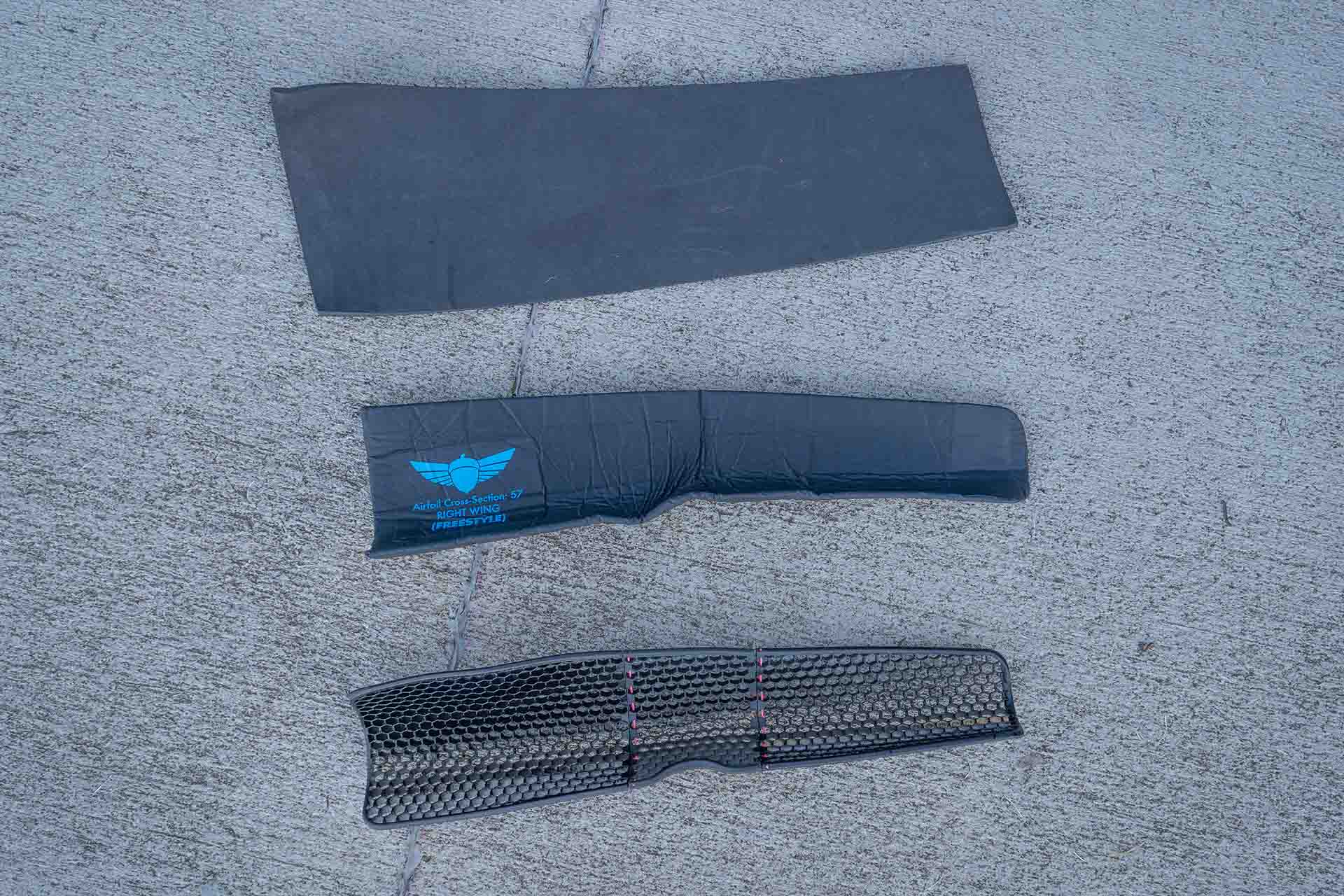
Inlets: Reinforced openings (usually on the chest or armpits) that allow air to enter and "inflate" the suit, giving it a rigid, aerodynamic shape.
- Airlock: A fabric flap or "gate" inside the intake allows air to enter but prevents it from escaping. The suit stays fully pressurized and rigid, regardless of the flyer’s orientation or external turbulence.
- Grippers: Handles at the end of the arm wings that the pilot holds to maintain tension and control the wing shape.
- Leading edge: The stiffer part of the suit's forearm section, responsible for creating an airfoil profile and reducing drag.
2. Flight Dynamics & Performance
The Physics of Flight
-
Glide Ratio: The ratio of horizontal distance traveled to vertical altitude lost. A 3:1 glide ratio means for every 1 meter you drop, you move 3 meters forward.
-
Flare: A maneuver at the end of a flight where the pilot converts forward speed into lift, briefly gaining altitude or slowing the descent rate before deploying the parachute.
-
Angle of Attack (AoA): The angle between the chord line of the wing and the oncoming airflow. Managing AoA is the key to maximizing distance or time in the air.
-
Burbling (WAKE): The area of turbulent, "dead" air behind a wingsuit pilot. This can make parachute deployment tricky if the pilot doesn’t clear the suit from the deployment path.
3. Maneuvers & Disciplines
In-Air Actions
-
Wingsuit (B.A.S.E.): Starting a wingsuit flight from a fixed object (cliff).
-
Backfly: Flying with the back facing the ground. This is an advanced skill used in acrobatics and formation flying.
-
Flocking: A group of wingsuiters flying together in a tight, bird-like formation.
-
Proximity Flying: An advanced (and high-risk) discipline of flying close to the terrain, such as mountain ridges or through "cracks."
4. Safety & Deployment
The "Clean" Break
-
Deployment Window: The specific altitude range where a pilot must transition from flight to parachute deployment. Usually starts at 1500-1650m (5,000–5,500ft) AGL to allow for the slower deployment process.
-
Wave-off/The Arch: The physical signal and body position change used to alert others that you are about to pull your parachute.
-
PC (Pilot Chute) Hesitation: A situation where the small chute used to pull out the main parachute gets caught in the turbulent air (burble) behind the suit.
5. Advanced Aerodynamics
-
Vertical Speed (Fall Rate): Measured in km/h or mph, this is how fast you are dropping toward the earth. Pilots can "float" by reducing this speed significantly through wingsuit surface tension and body position.
-
Horizontal Speed (Ground Speed): Your speed relative to the ground. In high-performance flight, this can exceed 250+ km/h.
-
Best Glide: The specific airspeed and body configuration that yields the maximum horizontal distance for the minimum altitude loss.
-
Polar Curve: A graph used by performance pilots to understand the relationship between their sink rate and forward speed. It helps in finding the "sweet spot" for specific conditions.
-
Relative Wind: The wind "created" by your movement through the air. In wingsuiting, you don't just feel the wind; you are the wind.
6. Competition
-
Performance Window: A designated altitude block (e.g., between 3,000m and 2,000m) where a GPS logger records data to score a pilot on Time, Distance, or Speed.
-
GPS Logging: The use of devices like the flysight to provide real-time audio feedback and post-flight data analysis.
7. Specialized Gear & Rigging
- Rigging/Line Trim: The specific calibration of the parachute lines. Wingsuiting requires a "flatter" trim to prevent the parachute from opening too aggressively while the pilot is still moving at high forward speeds.
-
Internal Pressure: The air pressure inside the suit. High-performance suits use specialized Airlocks (Non-Return Valves) to keep the suit rock-hard even during maneuvers where the angle of attack changes.
8. The "Human Element" & Techniques
-
De-powering: The act of "breaking" the aerodynamic shape of the suit (usually by changing AoA, tucking the knees) to quickly lose lift or bleed off speed.
-
Leading Organizer (LO): The pilot at the front of a flock who is responsible for the line, speed, and safety of the entire group.
-
Docking: In advanced acrobatic wingsuiting, this refers to two or more pilots making physical contact (taking grips) while in flight.
-
Targeting: Using a visual reference point on the horizon to maintain a straight flight path, essential for distance competitions.
9. The Physics of the Performance Window
When pilots compete in performance disciplines, they aren't just "falling with style"; they are managing complex variables within a specific vertical slice of the sky.
-
The 1km Window: Usually the standard for competition, measuring performance between 3,000m and 2,000m AGL (Above Ground Level).
-
Glide Ratio (L/D): Represented as Lift over Drag.
-
Max L/D: The configuration that provides the furthest travel.
-
Min Sink: The configuration that keeps the pilot in the air for the longest time, regardless of distance.
-
-
True Airspeed (TAS) vs. Ground Speed:
-
TAS: Your actual speed through the air mass.
-
Ground Speed: Your TAS plus or minus the effect of the wind. This is what your GPS tells you, but not necessarily how the suit is performing.
-
10. Advanced GPS Data Analysis (The "FlySight" Language)
-
The "Swoop" or "Dive": The initial move out of the plane where a pilot trades altitude for airspeed to "pressurize" the suit and reach the efficient flight envelope.
-
Audio Feedback: Competitive pilots use multi-tone sirens in their helmets.
-
High Pitch: You are climbing or flying efficiently.
-
Low/Flat Tone: You are stalling or dropping too fast.
-
11. Meteorological Factors (The Invisible Terrain)
-
Thermal Lift: Just like gliders or birds, wingsuiters can encounter rising pockets of warm air. While rare to "soar" upwards, it can significantly boost distance scores.
-
The Flare-up: Utilizing a headwind to gain momentary altitude.
- Density Altitude: A measure of how "thin" the air is based on pressure, temperature, and humidity. Higher density altitude means the air is less dense, giving the suit less "bite" (lift) and requiring higher forward speeds to achieve the same aerodynamic performance..
12. Equipment Maintenance & Customization
-
Ribs: The internal support structures that maintain the wing's profile under high tension.
-
Tail Deflector: A feature on the back of the suit designed to direct air smoothly over the container, reducing the "burble" for a cleaner parachute deployment.
CATEGORIES: