
WSpoint »
KNOWLEDGE HUB
KNOWLEDGE HUB
Speed vs. Float: Optimizing Energy in Wingsuit Flock Formations
In wingsuit flocking and formation flying, the dynamic between speed (low AoA) and floating (high AoA) isn't just an individual piloting choice, it shapes how the entire slot, formation line, and group safety margin operate.
While individual skydives or BASE jumps prioritize maximum flare height or terrain clearance, flocking demands slot discipline, speed range matching, and dynamic energy management.
Here is how speed and float directly impact team dynamics, slot management, and formation safety in the air.
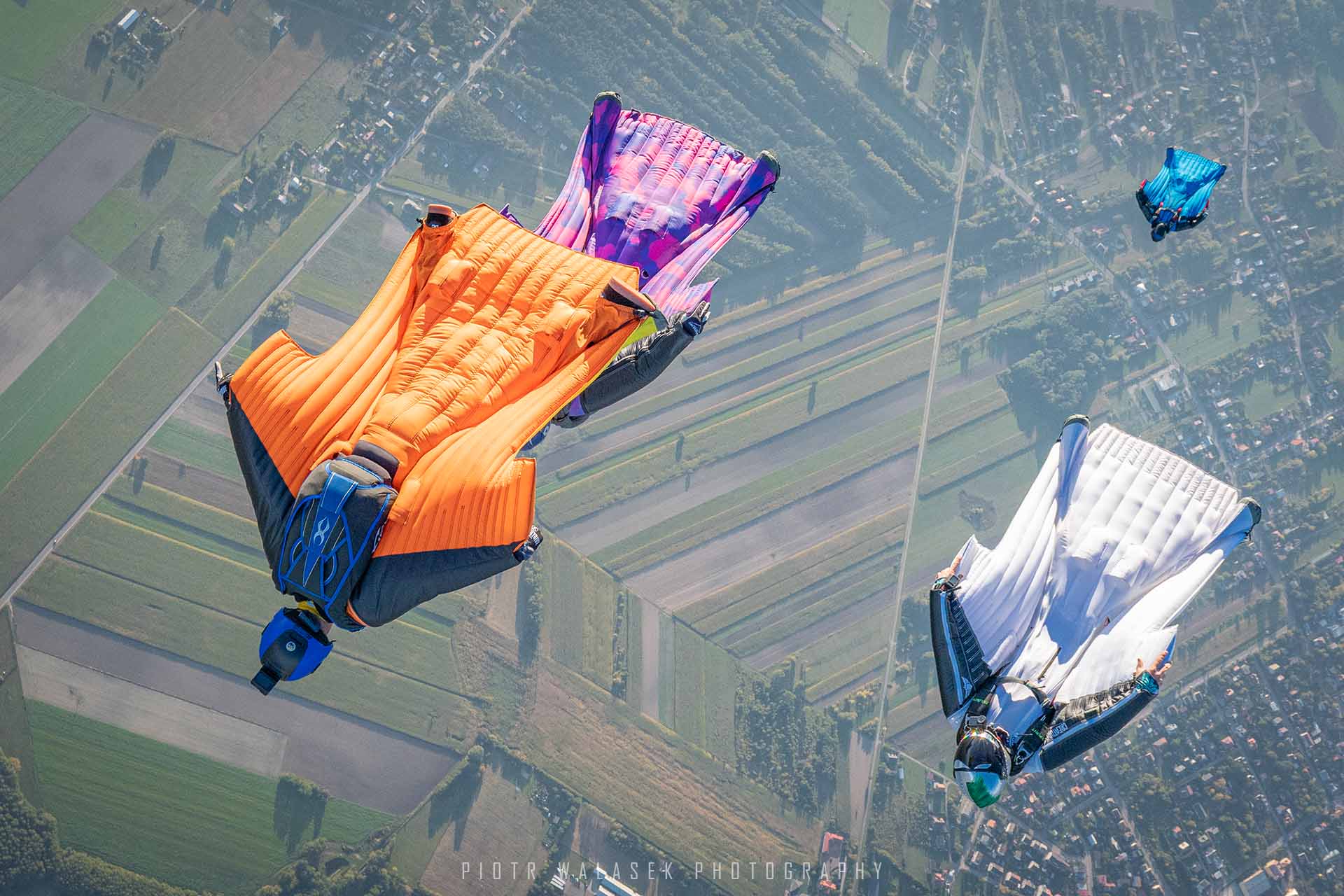
1. High Speed / Dynamic Flocking (Driven Low AoA)
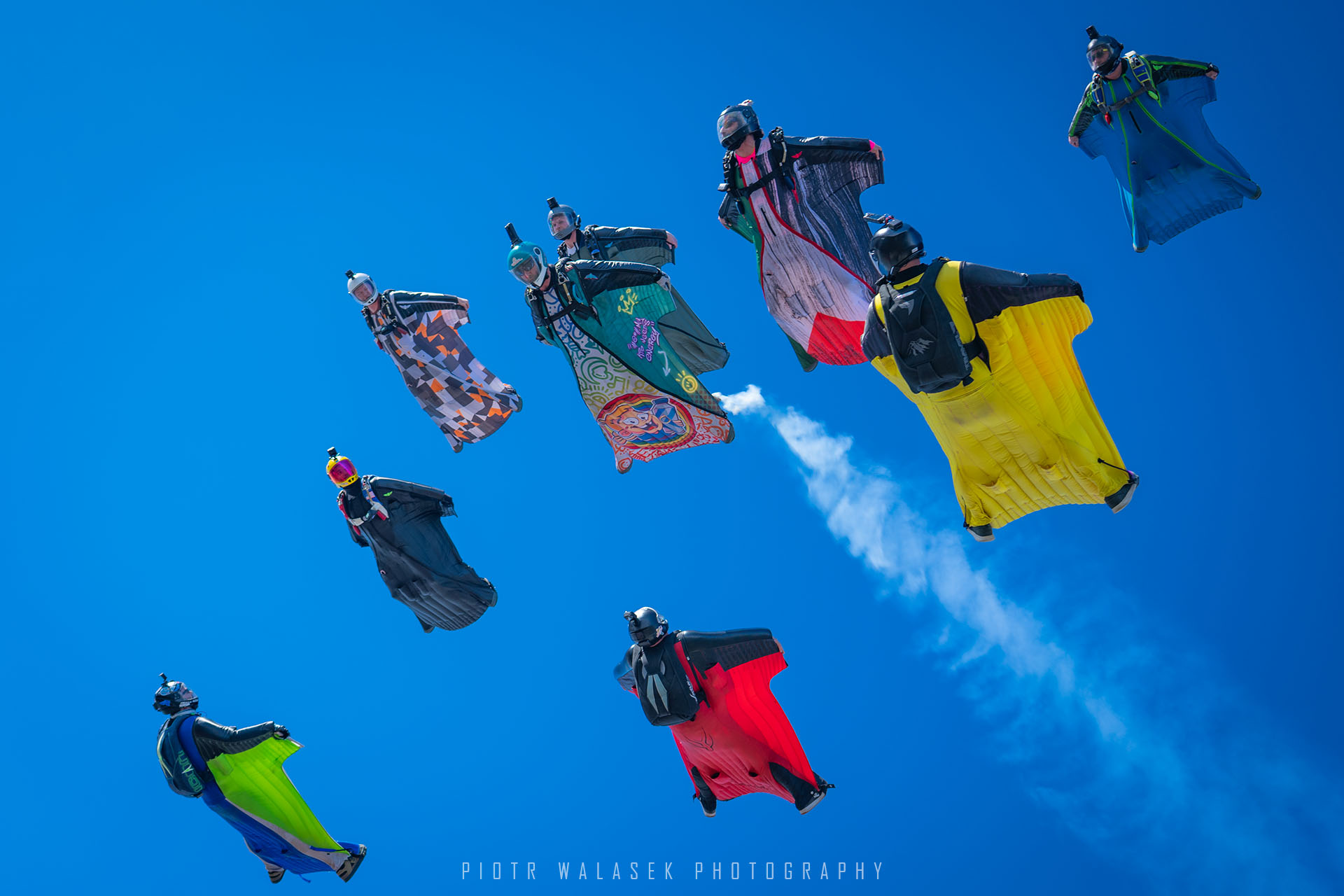
Flying high-energy formations means setting a base speed that keeps every suit in the grid well-pressurized and moving forward down the glide slope.
Benefits in the Flock
-
Rock-Solid Slot Stability: High airspeed maximizes suit pressurization. In a slot, high pressure prevents suit buffeting, holding every pilot on a stable, locked-in line.
-
Instant Corrections & Micro-Adjustments: When the formation speeds up or adjusts dive angles, high-speed pilots have immediate control response to brake, pop up, or slide sideways into slot without delay.
-
Clean Wake/Burble Management: Fast-moving wingsuits leave sharp, clean, predictable wake turbulences behind them. Crossing another pilot's line or passing through the flock's burble at speed causes far less instability than doing so at low speeds.
-
Crisp Breakout & Safe Deployment: Breaking off from a fast flock allows pilots to carve cleanly away with high tracking speed, clear the group quickly, and convert speed into a clean, level flare before pulling into smooth air.
Disadvantages in the Flock
-
Demands More Strict Suit Matching (Beyond Just Surface Area): High-speed flocking exposes how different internal profiles and wing geometries handle energy. Even between suits of equivalent size, subtle differences in airfoil thickness, pressure management, and surface tension mean two suits will naturally track on different planes. If the base pushes a high-speed line, pilots whose suits lean toward a floatier, higher-lift profile have to aggressively dump pitch and work physically harder just to keep up and avoid getting left behind by slicker, faster-driving designs.
-
High-Consequence Overshoots: If a pilot misjudges their approach into a fast flock, overshooting can lead to high-velocity blow-bys or dangerous slot intrusions.
-
Higher Physical Fatigue: Holding a fast base across multi-point flock dives or long navigational lines requires continuous core engagement and arm endurance.
2. Slow / Float Flocking (High AoA)
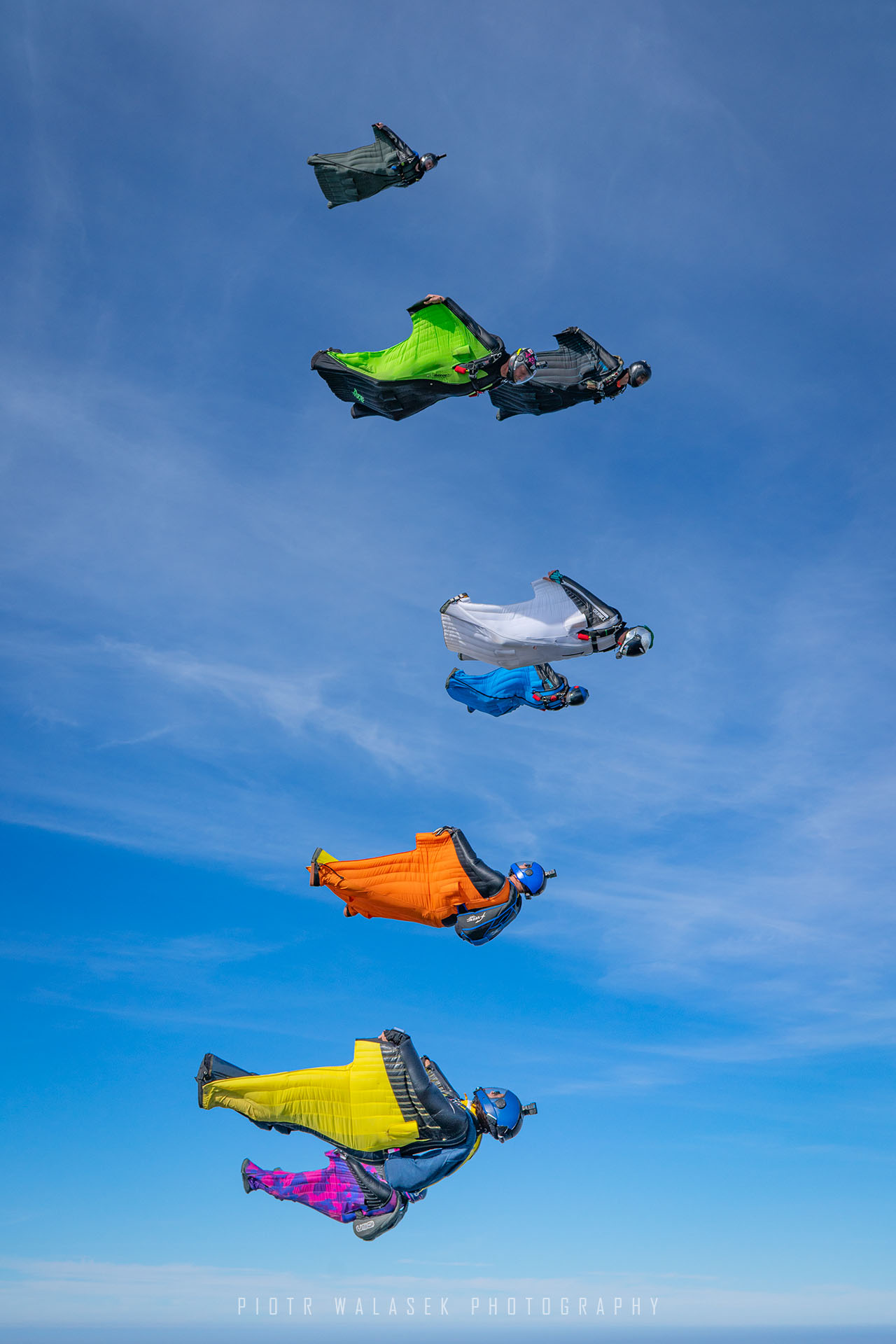
Holding a slow, floaty base is often used to accommodate mixed-experience groups, smaller suits, or heavy pilots trying to match lighter group members.
Benefits in the Flock
-
Level Floating for Heavier / Smaller-Suit Pilots: Allows heavier pilots in larger suits to stay on level with lighter team members without falling below the formation floor.
-
Easier Grid Visuals for Beginners: Slower forward speeds give entry-level flock pilots more time to observe reference points, check slot sightlines, and process formation relative movement.
-
Extended Formation Working Time: Lower vertical sink rate means more working time per jump to complete complex formation changes or multi-point transitions.
Disadvantages in the Flock
-
"Accordion Effect" & Sluggish Responses: When a flock flies slow, control inputs become mushy and laggy. Small speed adjustments by the organizer ripple backward, causing the rear grid to constantly rubber-band and over-correct.
-
Narrow Speed Range & High Stall Risk: Floating near the suit’s minimum sink point leaves almost no buffer. If a pilot gets popped up by turbulence or a burble, they risk stalling into the path of trailing jumpers.
-
Poor Recovery Options: If a pilot loses their slot or gets floating high above the flock, dropping back down into slot without flying over top of the group (and dumping dirty air on others) becomes extremely difficult.
-
Turbulent Breakouts & Burble Ingestion: Pulling out of a floaty flock often leaves pilots with low airspeed, making separation sluggish and risking deployment in messy, turbulent wake air.
3. Slow / Float Flocking (High AoA)
| Parameter | Fast Base Flocking | Floaty Base Flocking |
|---|---|---|
| Grid Stability | Locked-in, solid slots | Wobbly, prone to float/sink drift |
| Airspeed | 150 - 200+ km/h | 110 - 150 km/h |
| Control | Immediate, sharp feedback | Mushy, laggy response |
| Burble Handling | Punches cleanly through | High risk of instability/stall |
| Accordion Effect | Minimal | High across outer slots |
| Breakout Separation | Rapid horizontal track | Sluggish separation, low energy reserve |
| Best Fit For | Similar suits & solid skill levels | Mixed suits / wide weight variance |
The Flocking Golden Rule: Fly the Golden Mean but Speed in Must
In flocking, the ideal speed isn't absolute maximum speed, nor is it floating on the edge of stall. The optimal flock base sits right in the active pressurization sweet spot, fast enough that every pilot's suit is rigid with full control authority, but manageable enough that the lightest and heaviest suits in the formation stay comfortably inside their mid-range pitch of speed.

CATEGORIES: